Summary
Audio uses your browser's built-in voice support.
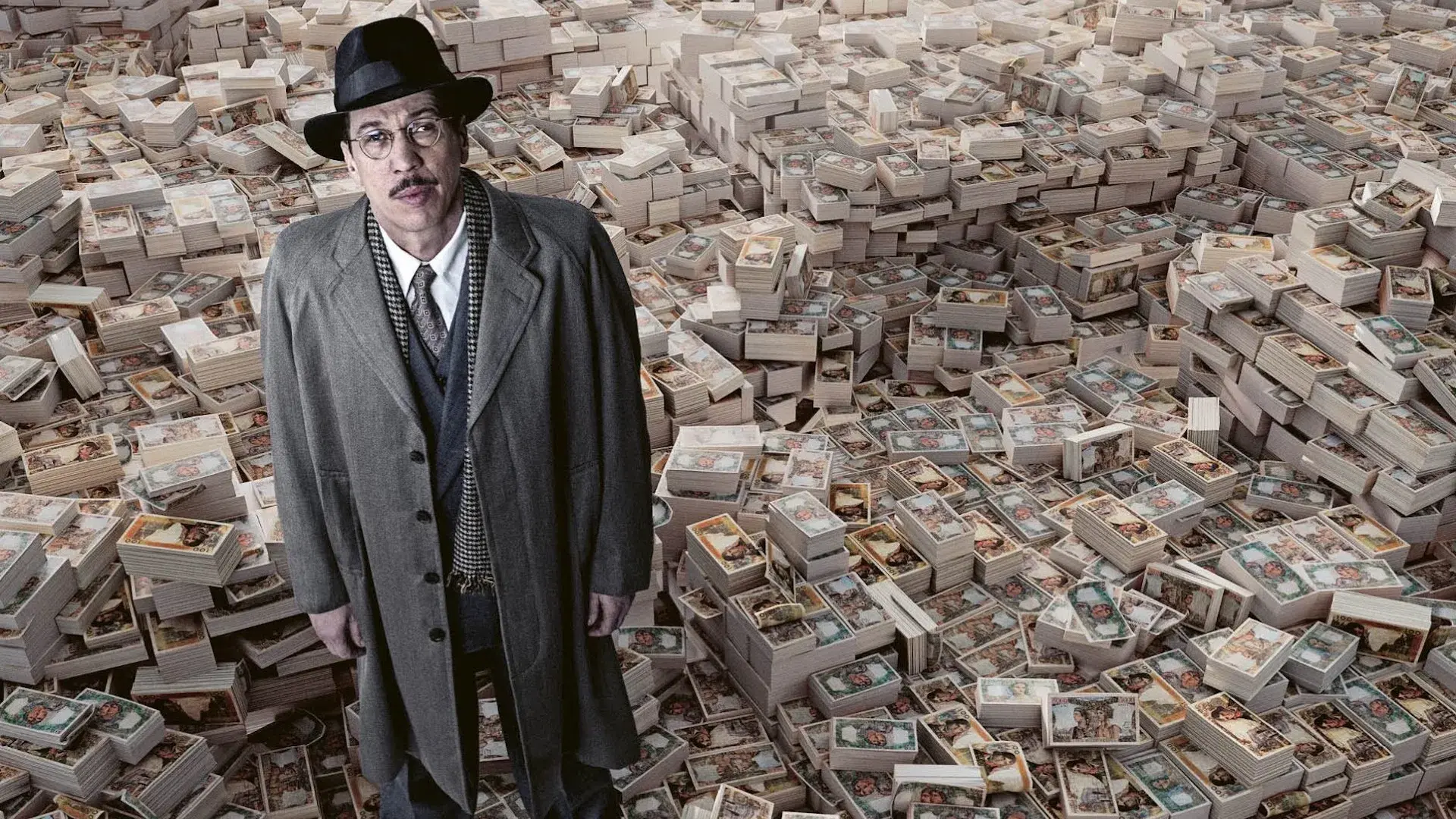
In the years after the Second World War, Jan Bojarski, a Polish engineer who fled to France, struggles to rebuild his life. Lacking official papers, he is unable to patent any of his inventions and is reduced to poorly paid odd jobs despite his obvious talent, a humiliation that leaves him consumed by a sense of injustice. When a gangster who has noticed his near-obsessive precision offers him a way to put his skills to use, Bojarski reluctantly agrees to counterfeit banknotes.
Working alone in a workshop hidden beneath his garden shed, Bojarski builds his own printing presses, manufactures his own watermarked paper, mixes his own inks and engraves his own plates, turning out forgeries so precise that the Bank of France cannot always tell them from genuine notes. As his technique improves and the scale of his fraud grows, he becomes the bank's most-wanted target and is nicknamed the "Cézanne of counterfeit money".
Away from his workshop, Bojarski leads an outwardly ordinary life in the Paris suburbs with his wife, Suzanne, and their children, who believe he works as a travelling salesman. The film traces his growing isolation, torn between devotion to his family and the secret that separates him from them, as Suzanne slowly begins to suspect the truth.
Opposite him, Commissioner André Mattei, regarded as one of France's finest detectives, turns the hunt for the counterfeiter into a personal obsession that consumes him as thoroughly as the forgeries consume Bojarski. Their pursuit plays out as a long-distance duel of false leads and near-misses, with Bojarski repeatedly slipping through the police's fingers and defying the state for more than a year before he is finally caught and made to answer for his crimes.
Source: Wikipedia (CC BY-SA 3.0)